
Of the same root, of one cluster
Sarawak holds the food knowledge of thirty-four indigenous communities. Some of it is still spoken fluently. Some of it is close to being lost. Serumpun Sarawak is the long-term conservation movement we built to record that knowledge, protect it and pass it on, using science, culture and cooking, before more of it disappears.
Serumpun is a Bahasa Malaysia word meaning *of the same root, of one cluster*. It names something true about Sarawak: its thirty-four indigenous communities share one continuous body of cultural practice, grown from the same Bornean rainforest and handed down through generations. Serumpun Sarawak is the cultural-diplomacy movement that puts that practice on the formal record. As its Co-Founder and Custodian, I keep it for a while. I do not own it. The work belongs to the forest, to the elders who taught us its language, and to the chefs who will carry it after me.
Four chapters across 2025 and 2026
The whole plan was announced at the unveiling. After that, our job was to deliver it.
French Borneo, and the Atelier of Flavours
The cuisine at the heart of the movement, and the tool that checks its menu against the world's flavour data.
The thread running alongside
This runs through all four chapters.
The Serumpun Leadership Series
Recorded conversations with people whose own work has led them to the same conclusions about heritage, conservation and cultural diplomacy that guide Serumpun. Atlas Collective curated and produced the series, and the reels are on the Serumpun Sarawak Instagram channel.
Eight partners, formal positions
Every partner below has a formal role in Serumpun. Their positions are coordinated across state, scientific, cultural, academic and international mandates, and the structure exists so that the work can survive the loss of any one person, its founder included.


Build · Train · Transfer · Assure continuity
The Serumpun conservation work is built to outlast its founder, and the structure that makes that possible is already running. Five programmes select Sarawakian chefs, train them and hand on the movement's ethos and principles, then place them on institutional platforms where the work continues.
Why this work exists
Indigenous food knowledge is one of the most fragile things any culture holds. It lives in seasonal practice, in spoken instruction, in the hands of elders and in each community’s relationship with the forest that feeds it. Once it lapses, it cannot be rebuilt. We founded Serumpun to stop that loss as partners, working over years with Sarawak’s peoples, its scientific and cultural institutions, and a kitchen that treats heritage as something still alive.
How this work began
Serumpun Sarawak began as my personal vision. It entered the formal structure of the Sarawak State through a series of introductions, which I record here with gratitude.
Tan Sri Rafidah Aziz, Malaysia’s Minister of International Trade and Industry from 1987 to 2008 and Chairman of MATRADE from 1991, made the introduction that brought me to the attention of Tun Pehin Sri Dr. Haji Wan Junaidi bin Tuanku Jaafar, the Yang di-Pertua Negeri (Governor) of Sarawak, who took office as the eighth Governor on 26 January 2024. The Governor recommended that the Chairman of the Sarawak Tourism Board, Dato Dennis Ngau, contact me about working together.

The project started with me. The cooking, the mentee development and the work with government agencies and ministries are now shared across all the partners. I remain its main voice and face.
Communities and trust
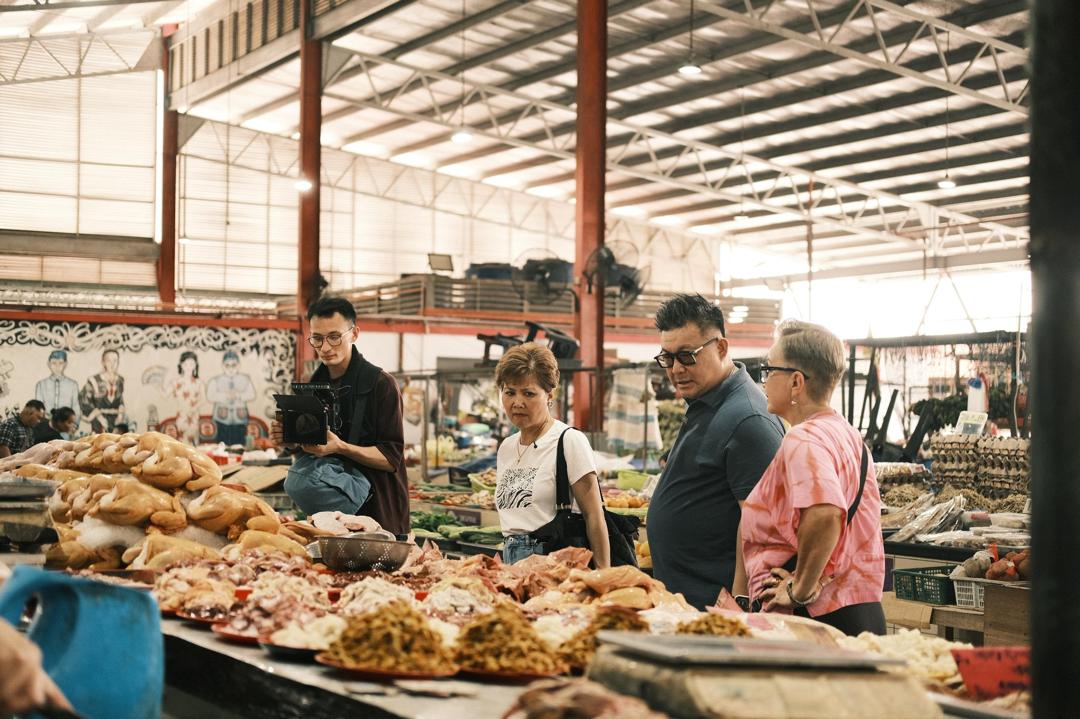
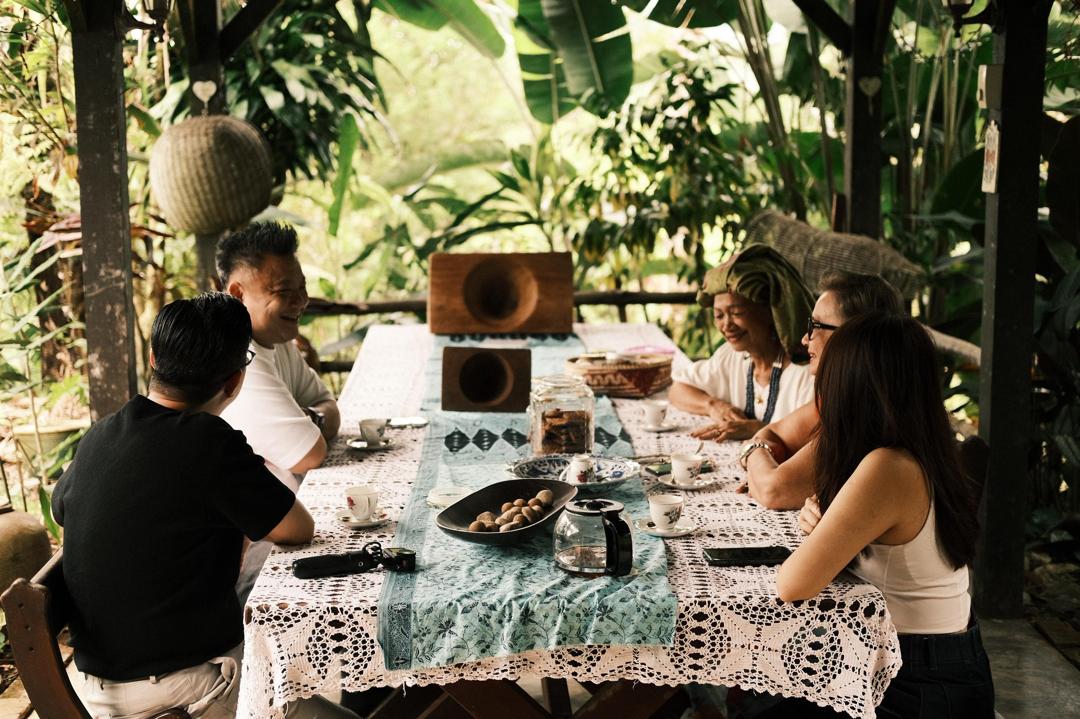
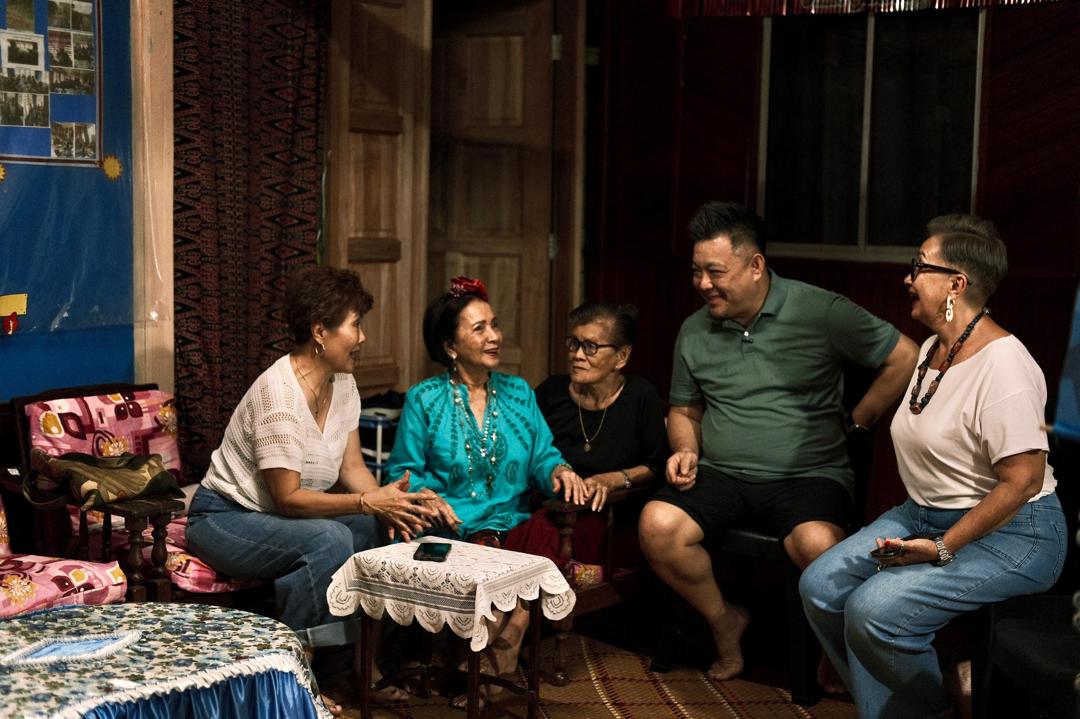
The work begins with consent and continues with reciprocity. The communities lead the fieldwork themselves. We record knowledge with their permission and give it back to them in a form they can use: recipes returned to households, ingredients mapped to forest plots, spoken material archived in their own languages. The studio is a tool, and the communities are the authors. That order governs every decision the project makes.

The full record of the fieldwork, in photographs and films from the expeditions, is in the Serumpun Archive.
The methodological framework
The work follows a set framework. Three lenses (culture, experience and cuisine) are applied to each community’s life. Under each lens we map eleven themes: craft, economy, culture, festivals, legends, heroes, symbols, landmarks, literature, sound and music, and nature.
Each community is placed in its ecological setting, whether forest, highlands, river, sea, coast or city, and looked at from five angles. How people live day to day. How they produce and make things. How they deal with the natural world. How their cultural traditions adapt to modern use. And what the community itself finds beautiful and inspiring.
This framework is how we listen before we cook. It lets the cuisine honour a community without flattening it, and lets a foreign technique arrive as a guest instead of a coloniser.
The temporary custodian
A conservation movement that ends with its founder has failed. From the start, Serumpun Sarawak has measured its success by one thing, and it is not international recognition or praise from critics. It is the day I am no longer needed.
My role in this programme is temporary by design. I am a guide, an interim custodian trusted by the people of Borneo and their leaders to light a fire that others will tend with more right, deeper knowledge and a longer tenure than I could ever have.
Serumpun Sarawak has never been my movement. It belongs to the forest, to the elders who taught us its language, to the communities who shared their most intimate knowledge with patience and grace, and to the young chefs who will one day teach what they have learned to the generation after them.
The world stage and continuity
In August 2025, Serumpun Sarawak made its international debut at Seaside Studio CASO in Osaka, during Sarawak Week at World Expo Osaka. In March 2026, UNESCO Creative City of Gastronomy Kuching formally endorsed the movement for its contribution to conserving Sarawak’s indigenous gastronomy, food culture, and edible medicinal flora and seeds. Continuity rests on four stages, build, train, transfer and assure continuity, carried out through the mentorship programme, the adoption at Sarawak Cultural Village, the national tour with the Sarawak Tourism Board, media training for the mentees, and Serumpun In Motion. This is a commitment for a generation, well beyond a single event.
Serumpun Sarawak now lives inside the oldest living institution of Sarawakian culture. It will not fade, and it will not be shut away in an archive. It will be cooked, tasted, shared and passed on every day by the people it was always meant to serve.
What carries forward
The Kuching Finale closed the founding year, and the movement goes on. After April 2026, Serumpun enters its second year. The In Motion mentee programme continues, and so do the partnerships with the institutions and with UNESCO Creative City of Gastronomy Kuching. The cultural-diplomacy standard we set in the founding year is still the one we work to.
Over the founding year I learned that the cuisine could travel and could come home. The years ahead will test what that year proved.
Questions answered
What is Serumpun Sarawak?
A long-term conservation and cultural-diplomacy movement that records, protects and passes on the food knowledge of Sarawak's thirty-four indigenous communities, using science, culture and cooking. It was unveiled in Kuching in July 2025.
Who are Serumpun Sarawak's partners?
The Ministry of Tourism, Creative Industry and Performing Arts Sarawak (MTCP), the Sarawak Tourism Board, the Sarawak Biodiversity Centre, the Borneo Cultural Museum, the Culinary Heritage and Arts Society Sarawak (CHASS), Atlas Collective, Professor Gerard Bodeker as scientific advisor, and UNESCO Creative City of Gastronomy Kuching as endorsing body.
What happened in Serumpun's founding year?
Four chapters: the unveiling in Kuching in July 2025, the international debut at Expo 2025 Osaka in August, the homecoming inside Gunung Mulu National Park in October, and the Kuching Finale in April 2026.
How is Serumpun meant to outlast its founder?
By design. Five programmes select Sarawakian chefs, train them, hand on the movement's ethos and place them on institutional platforms: the In Motion mentorship, the adoption at Sarawak Cultural Village, a national tour with the Sarawak Tourism Board, media training, and Serumpun In Motion. The founder's role is temporary, and success is measured by the day he is no longer needed.
What comes after the founding year?
Serumpun entered its second year after April 2026. The In Motion mentee programme and the partnerships continue, and the French Borneo cuisine platform draws on the knowledge gathered.
How can an institution take part?
Write to connect@chefjameswon.com and say what your institution can carry. Serumpun grows through its partners, above all those with a stake in Borneo's food heritage.
Selected Press
Full archive →- The Star Locally Sauced Launch chapter · National flagship 2025-07-13
- The Borneo Post Serumpun Sarawak Showcases Indigenous Heritage, Cuisine and Culture in International Debut in Osaka Osaka chapter · Regional flagship 2025-08-10
- Palate Asia In The Land Of The Hornbills: Experiencing Serumpun Sarawak In Mulu Mulu chapter · Editorial feature 2025-10-23
- Sarawak Sin Chew 砂拉越星洲日报 Serumpun Sarawak — Minister of Tourism remarks Kuching Finale · Federal-institutional record 2026-04-02 ZH-CN
- UKAS — Sarawak State Communication Sarawak State Communication on Serumpun Sarawak Kuching Finale · Official state-government record 2026-04-02
- TTR Weekly Serumpun Sarawak: A Defining Finale in Kuching Kuching Finale · International tourism trade · closing piece 2026-04-15
- BFM 89.9 Enterprise Explores: Conserving and Profiting, Sarawak's Food Heritage Broadcast interview · Conservation and commerce 2026-09-21
Heritage belongs in a kitchen, a forest and a language still in use, more than in a museum.
James Won
Adjacent chapters
The work belongs to the forest, and the forest belongs to the communities who taught us its language. Whatever lasts will last through them.