

Nine weeks, then the pivot
A Lyonnaise bouchon at Pavilion Kuala Lumpur, with my grandmother's hand at the table. When the city needed a relief kitchen, it became one.
Bouchon Enfin opened at Pavilion Kuala Lumpur in late 2020. It was the most casual room in the Enfin family, and the one I built around food my grandmother would recognise. The format was a Lyonnaise bouchon, the family bistro of Lyon's Croix-Rousse, where a meal comes from recipes handed down through a family. I brought that tradition to Kuala Lumpur and set it beside the dishes I grew up on. Contemporary French with Modernist technique at the front of the room; Malaysian makan warmth at the table.
The plan was sound and the room was beautiful. The timing could not have been worse.
Nine weeks after we opened, the Movement Control Order shut the doors. What I did next is what defines the restaurant on the public record. Within a week I had moved the kitchen to the Be Kind programme, cooking and handing out dinner packets to organisations and communities in need across Kuala Lumpur, every week, for as long as the closure lasted.
The room is gone. The example it set is still with me.
The Lyon tradition and my grandmother’s hand
The bouchon began in Lyon’s Croix-Rousse district: a small, family-run bistro serving Lyonnaise specialities at neighbourhood prices. It prizes warmth and plain speaking, and its food comes from a grandmother’s recipe book.
That description fitted me twice. My French training gave me the bouchon’s technique. My grandmother gave me its temperament. Bouchon Enfin was the first room where I let the two sit at the same table.
The Malaysian twist was on the menu itself. There were pork dishes any Malaysian raised around a makan table would know, built on cuts and curing methods I learned in France and seasoned from my grandmother’s shelf. Sarawak heritage rice took the place of arborio. Langit Collective peppercorn took the place of the supermarket grind. Plates came family-style, because that is how my grandmother always served. Prestige Online Malaysia ran my own account of the concept, and UFood / Oriental Daily explained the bouchon tradition to Malaysian readers, and how it differs from a brasserie or a bistro.
It was the most generous space, architecturally, that I had ever run. Contemporary French with Modernist technique at the front of the room, bouchon warmth at the table.
We remain hopeful for 2021 — to be safe and well.
James Won · Prestige Online Malaysia · late 2020
The room: Swofinty Yik Design and Kenji Chai
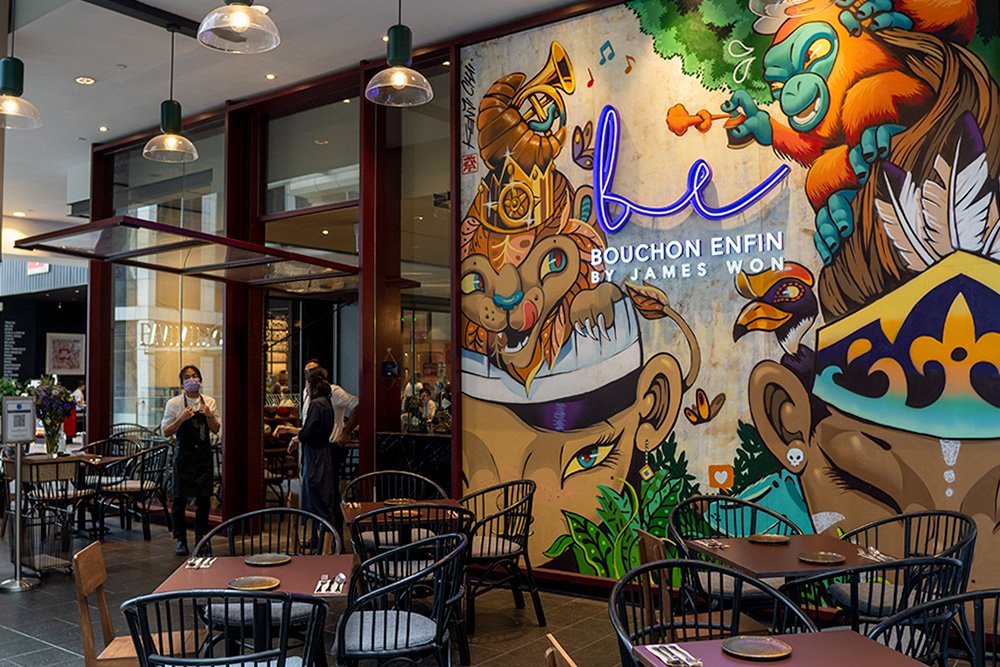
Swofinty Yik Design, the award-winning Malaysian interior practice, gave the room its shape. My brief was to turn the bouchon’s family warmth into a dining room on Pavilion Level 3. Two years later Swofinty also designed Shin’Labo at Lalaport. That was deliberate: the bouchon showed me what the practice could do, and when the next room needed the same hand, I went back to them.

Photograph: Bouchon Enfin archive.
Kenji Chai painted the mural at the front of house. He is the Malaysian street and graffiti artist whose lions, hornbills and feathered figures appear on walls across the country. I asked him in because the bouchon tradition is plain-spoken and folkloric, and the room needed a Malaysian folk language of today to answer it. The mural stands guard: a lion, a hornbill and a masked figure in a feathered headdress, with the neon be signature that let you find the room from the Pavilion concourse.

Photograph: Bouchon Enfin archive.
Kenji also painted the feathered wings beside the entrance, one feather at a time, onto the grooved wall. Guests walked in beneath them.
Charcuterie: Mr Kuan and the in-house programme
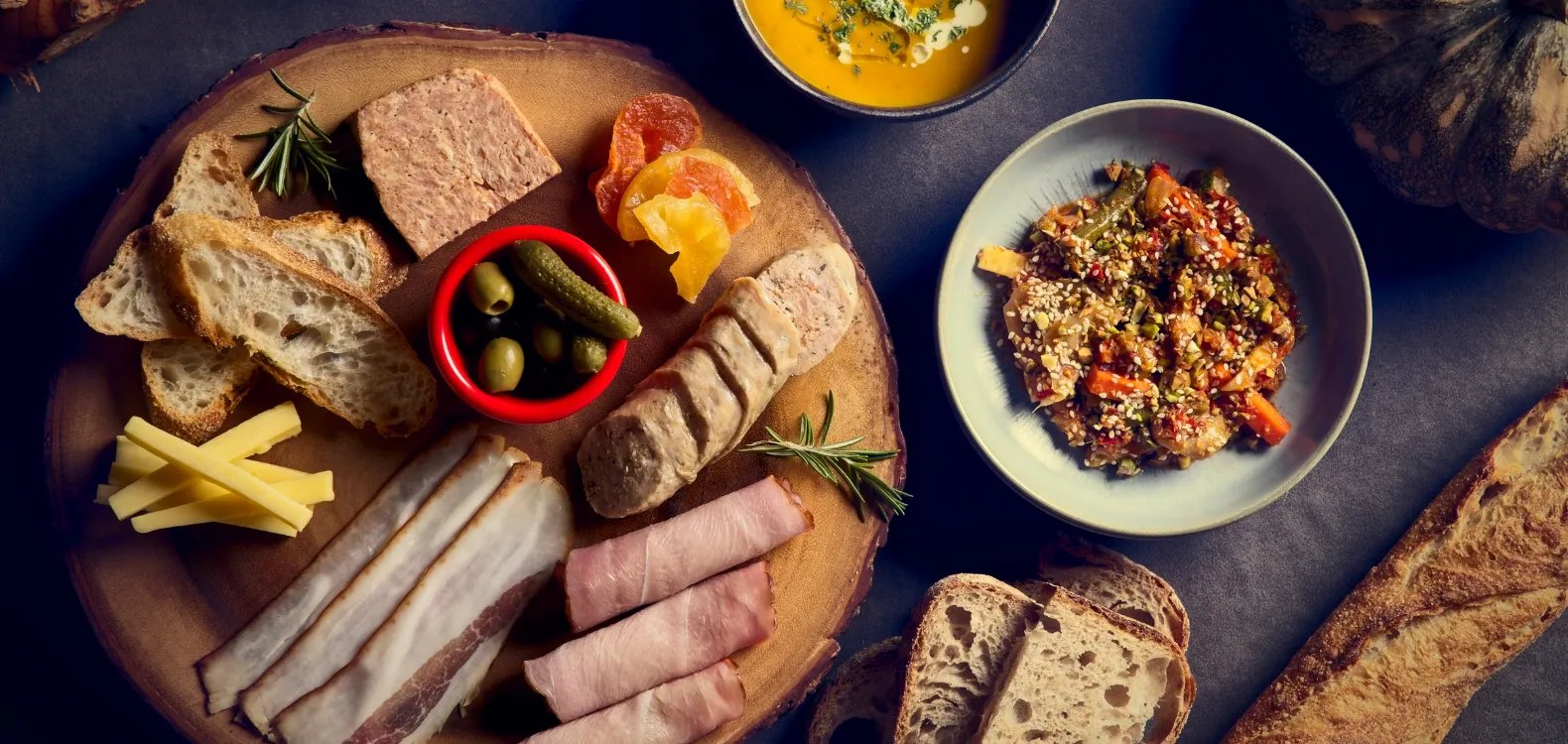
Our signature was the in-house charcuterie, and it belonged to Mr Kuan, my charcuterie expert. He cured, smoked and aged everything on the board: smoked ham, smoked bacon, cured loins, pâté en croûte. A bouchon is a charcuterie house before it is anything else. In Kuala Lumpur there was no supplier working at the level I wanted, so we built the programme ourselves.

Photograph: Bonnie Yap.
His ham and bacon ran right through the menu. The carbonara used his bacon and the fried rice used his ham. The donabe rice pots, made with dark Sarawak heritage rice, were finished with smoked pork belly that had spent three weeks in his cure. In practice the kitchen ran to his curing calendar, and we wrote the menu around it.

Photograph: Bonnie Yap.
The pork chop was the centre of the room. Cut on the bone, dry-rubbed, aged in Mr Kuan’s cabinet and finished over fire, it came with a tabbouleh chimichurri, crisp pork-rind fingers and a fruit chutney to cut the fat. A Lyonnaise plate, seasoned the way my grandmother would have done it.

Photograph: Bonnie Yap.
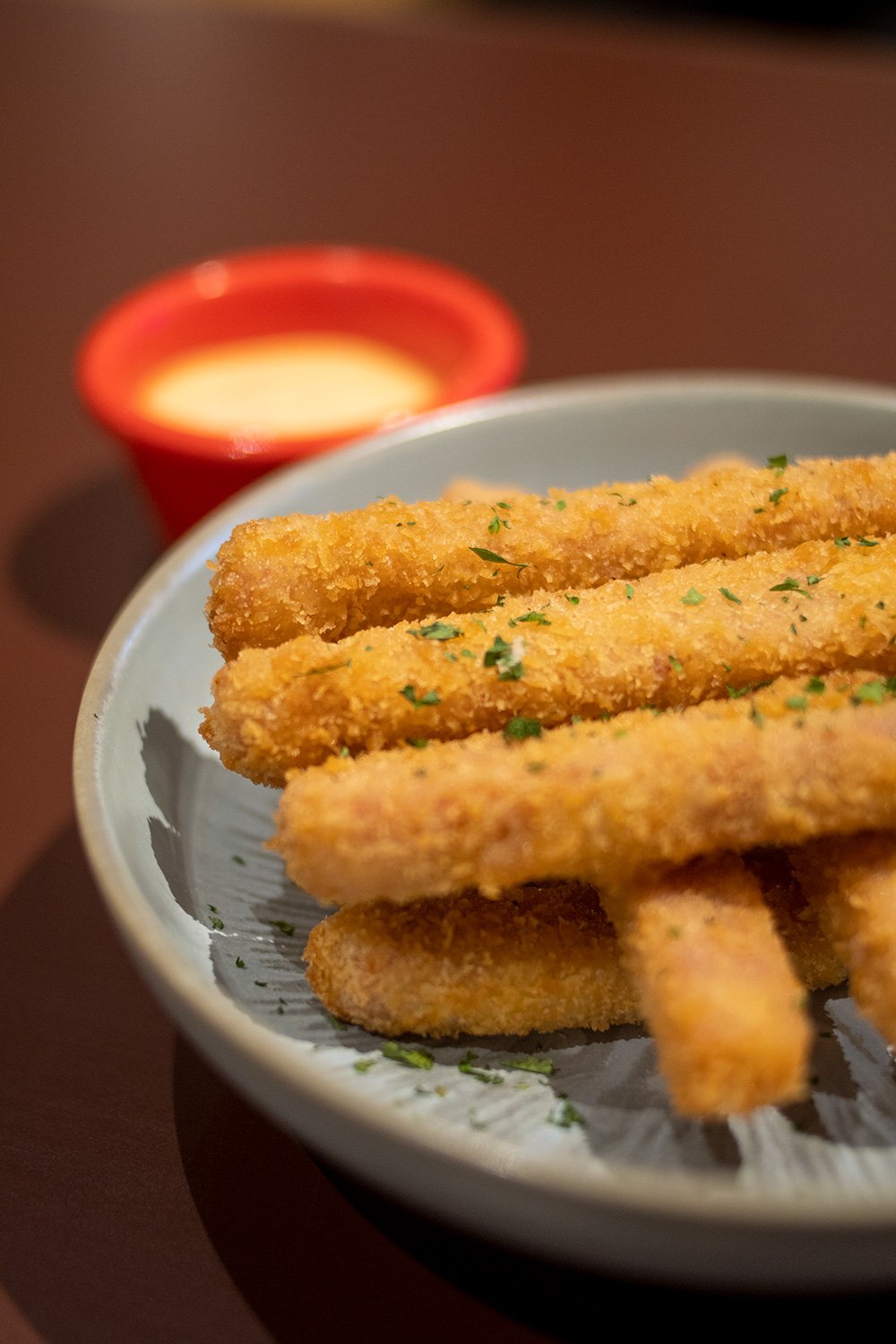
The glazed pork belly was the most plainly Malaysian thing we served. A clean square of belly, lacquered in dark soy and honey, read as char siu to half the room and as laquage to the other half. Sesame green beans on the side. Shoestring fries, because every bouchon serves something with frites.

Photograph: Bonnie Yap.
The parfait was on every starter board. Chicken liver worked smooth as silk, sealed under a clear layer of port-wine jelly that gave way as soon as the toast went in.
Sourcing: Langit Collective and the East Malaysian heirlooms
Our sourcing started with Langit Collective, the Malaysian social enterprise that works with smallholder farmers in East Malaysia and brings their heirloom produce to market at a fair return. We chose them on purpose. The rice was theirs, and so was the peppercorn. The golden coral snails, a rare highland variety farmed by Sarawak smallholders, also came through them, onto a Lyonnaise plate that would normally have called for Burgundian escargot.

Photograph: Bonnie Yap.
Heritage rice over arborio, Langit peppercorn over a generic grind, golden coral snails over escargot: those choices were about telling the truth on the plate, about where I was cooking and for whom. A Lyonnaise bouchon in Kuala Lumpur, supplied from East Malaysia, run by a chef whose grandmother taught him how to read a market.

Photograph: Bonnie Yap.
We made a Lyonnaise risotto, slowly, with Langit’s heritage rice. The long, dark grain finishes earthier than arborio, and it took the green of fresh parsley the way paper takes ink. Puffed pork rind on top for crunch. On the plate, it made the case that Sarawak rice belongs in a French repertoire just as it belongs in a Sarawakian one.
The plates

Photograph: Bonnie Yap.
Every bouchon starts the same way: bread on the board, cultured butter beside it, no fuss. We baked our loaves in-house and toasted them to order, so the crust picked up a little bitterness from the grill. The butter was salted, soft and generous. If a guest said no to the bread, they had not really sat down yet.

Photograph: Bonnie Yap.
Through the cooler month we cooked a cellar braise: chicken in red wine with button mushrooms and carrot, and garlic toast on the side. This was the bouchon at its most direct. Nothing piled on top, nothing built up in the bowl. Just a long braise, a slice of toast, and chicken that had taken on the colour of its own sauce.

Photograph: Bonnie Yap.
No bouchon kitchen gets away without steak frites. We cooked it properly: rested, sliced, finished in cast iron with rosemary, with béarnaise in a small dish and frites beside it. It came to the table without a word of explanation, which is how it should be.

Photograph: Bonnie Yap.
The whole roast chicken was the other dish for the middle of the table, brought out whole to share. The Malaysian touch was in the small bowl beside it: a chilli condiment my grandmother would have known, where a Lyonnaise table might expect gravy. Bok choy for something green. Shared, again, because that is how we built the menu.

Photograph: Bonnie Yap.
The pork burger was the casual end of the menu: Mr Kuan’s bacon, melted cheese, brioche and a cone of fries. A bouchon gives it the same care it gives the coq au vin. Same cook, same standard.

Photograph: Bonnie Yap.
Photograph: Bonnie Yap.
Photograph: Bonnie Yap.
Photograph: Bonnie Yap.
Every plate was made for sharing, because that is how Malaysians eat together. People came for yum cha, for birthdays, for the end of a long week in town. What I love about the bouchon is that it keeps the casual and the careful in one kitchen, cooked to one standard.
The drinks programme
The drinks followed the food. There was a wide gin selection with London Essence Tonic, classic and signature cocktails from the bar, a working wine list with French, Old World and a small Malaysian section, and champagne by the glass for any table that wanted it. We kept the list broad on purpose. At a bouchon the guest decides at the table what kind of evening it is going to be, and the drinks had to meet them there.
Featured launch film
Quick and Easy with Bouchon Enfin
A short home-cooking series: three dishes our guests loved, in a form a home kitchen can manage.
· twenty-five seconds, Pavilion KL, late 2020.
Nine weeks (late 2020 to January 2021)
Bouchon Enfin ran for nine weeks before the second Movement Control Order closed it in January 2021. I told Sin Chew Daily (12 April 2021) how the closure went and why I pivoted. Once it was clear the room could not trade, my priority was feeding people.
I had a choice to make, and what I chose is the real story of the room.
The Be Kind pivot and the #SupporkLokal sandwich cart
A week after we closed, I moved the Bouchon Enfin kitchen over to the Be Kind programme, cooking and distributing dinner packets for organisations and communities in need. Yahoo Malaysia / News covered it (Malaysian James Won fine dining chef launches Be Kind initiative), as did Robb Report Malaysia (Enfin × James Won — New Luxury Comfort Food Delivery Service), Sunshine Kelly (January 2021), Vulcan Post and Sin Chew Daily.
Two programmes ran side by side. Be Kind fed organisations and communities; that was humanitarian work. The Robb Report Luxury Comfort Food Delivery Service took Bouchon Enfin’s degustation standards into private homes; that was hospitality. Both ran from the same kitchen and both kept my team in work. The rule behind both was simple: a closed dining room was no reason for me to stop.
Bouchon Enfin was part of the wider BeKind Group, which committed ten per cent of group proceeds to partner charities and foundations for as long as it operated. That commitment applied across the whole group.
The part of the work most people saw was the #SupporkLokal sandwich cart. Every morning during the MCO we set it up outside the Pavilion Level 3 entrance and gave free breakfast sandwiches to anyone who needed one, with no questions and no forms. CincaiNews and Eh! / viralcham both ran the story under the headline Malaysian James Won’s restaurant gives free breakfast sandwiches to those in need.

Photograph: Bouchon Enfin archive.
We’re living amid such conditions [that] […] dinner packets to these organisations.
James Won · Yahoo Malaysia, January 2021
What stayed with me
Bouchon Enfin closed in 2021. The Lyonnaise bouchon became part of my history, and we handed the Pavilion space back. Be Kind stayed with me, and I have run every room since with the same habit of service.
My next room was Shin’Labo by James Won at Mitsui Shopping Park Lalaport KL, in 2022: the yōshoku salon Robb Report Malaysia later called Ryoutei Shin’Labo. Swofinty designed that one too. Mr Kuan’s charcuterie methods went on to MeatMore in 2023, and to the Mortlach Room inside it. The Be Kind example from Bouchon Enfin came with me to Shin’Labo and then to MeatMore, to the cultural diplomacy work I turned to in 2025, and to the Serumpun Sarawak movement, which is where my work sits on the formal cultural record today.
I could not save the room. I kept what it taught me.
The archive: alternative frames
A small gallery of frames that did not make the main story. They are here for anyone who loves a food photograph, and for any guest who wants one more look at the room before leaving the page.

Photograph: Bonnie Yap.
Questions answered
Is Bouchon Enfin still open?
No. Bouchon Enfin closed in January 2021.
What is a bouchon, and how did Bouchon Enfin make it Malaysian?
A bouchon is a small, family-run bistro from Lyon's Croix-Rousse district, serving Lyonnaise specialities at neighbourhood prices. At Bouchon Enfin, Sarawak heritage rice took the place of arborio, Langit Collective peppercorn replaced the supermarket grind, and plates came family-style, as my grandmother always served.
Who made the charcuterie at Bouchon Enfin?
Mr Kuan, my charcuterie expert, cured, smoked and aged everything on the Bouchon Enfin board: smoked ham, smoked bacon, cured loins and pâté en croûte.
What was the Be Kind programme at Bouchon Enfin?
A week after Bouchon Enfin closed, I moved its kitchen over to the Be Kind programme, cooking and distributing dinner packets for organisations and communities in need. Every morning during the MCO we also gave free breakfast sandwiches from the #SupporkLokal cart outside the Pavilion Level 3 entrance.
Who designed Bouchon Enfin?
Swofinty Yik Design gave Bouchon Enfin its shape on Pavilion Level 3, and the Malaysian street and graffiti artist Kenji Chai painted the mural at the front of house and the feathered wings by the entrance. Two years later Swofinty also designed Shin'Labo.
I could not save the room. I kept what it taught me.
In closing, the character of the room
Selected Press
Full archive →- Prestige Online Malaysia Bouchon Enfin by Chef James Won gives French cuisine a Malaysian twist 1 November 2020
- Adobo Magazine Brand & Business: Bouchon Enfin engages the Malaysian palate through fusion of French and Malaysian cuisine 15 November 2020
- August Man AM Reviews: Bouchon Enfin by James Won at Pavilion KL 1 December 2020
- Marketing Interactive Chef James Won's restaurant Bouchon Enfin names comms partners ahead of launch 15 October 2020
- Thirst Mag Bouchon Enfin by James Won — Pavilion KL 1 November 2020
- UFood / Oriental Daily Bouchon Enfin profile and the Lyonnaise bouchon tradition 1 December 2020 ZH-CN
- Sin Chew Daily Bouchon Enfin and the Be Kind pivot 12 April 2021 ZH-CN
- CincaiNews Malaysian James Won's restaurant gives free breakfast sandwiches to those in need 14 January 2021
- Eh! / viralcham Free breakfast sandwiches for those in need — Bouchon Enfin's #SupporkLokal cart 20 January 2021
- Yahoo Malaysia / News Malaysian fine-dining chef James Won launches Be Kind initiative 20 January 2021
- Robb Report Malaysia Enfin × James Won — New Luxury Comfort Food Delivery Service 15 January 2021
- Sunshine Kelly Bouchon Enfin by James Won — Pavilion KL and the BeKind initiative 20 January 2021
- The Star Rocking with sweet and savoury notes 2 March 2021
- Mens Folio Malaysia Get your MCO meals fix with these new restaurants 15 February 2021
- Vulcan Post Pandemic-era fine-dining feature 1 February 2021
- Wanderlog Bouchon Enfin by James Won — visitor record 1 January 2021
- Tourism Malaysia Festive decor at Pavilion REIT malls — Bouchon Enfin in the Deepavali setting 1 November 2020
Cross-references
Nine weeks of Bouchon Enfin. Then the city needed feeding, so we fed it. I could not save the room, but I kept what it taught me.